
Computer-Using Agents, LLM Upgrades, Agent Autonomy, and Human Incentives
An expert you'll really appreciate, new LLM upgrades, increased agent autonomy, and rewarding humans for developing AI skills. Lots of news here.


Several of you have expressed the opinion that some of our highlighted experts are too academic, too ascerbic. Most don’t know that the original pilot of Star Trek was rejected for the same reasons, but that was 60 years ago…
If you agree they’ve been too academic this week’s expert will be a breath of fresh air to you. Matthew Berman is a user and builder as much as he is an analyst and reviewer. His comments are grassroots, fundamental advice you can really put to use in your MSP practice. Enjoy meeting him!
AI Expert of the Week
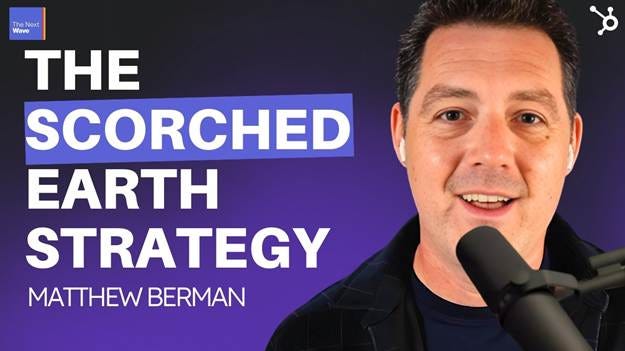
Matthew Berman – CEO/Future Forward
Matthew Berman is a prominent AI educator, creator, and founder of Forward Future, a fast‑growing media and education brand focused on helping individuals and organizations actually use AI in their day‑to‑day work.
Who he is
Founder and CEO of Forward Future, whose mission is to “empower every person and organization with artificial intelligence, enabling world‑changing productivity and efficiency.”
Runs one of the fastest‑growing AI YouTube channels and newsletters under the Forward Future brand, focused on practical AI news, education, and implementation.
Described in third‑party write‑ups as being “instrumental in spreading AI knowledge” through clear explanations of topics like AI agents, tools, memory, and planning.
What he actually does
Publishes the “Future Tech Digest,” a daily‑style newsletter summarizing and explaining the most important AI stories, including model launches, enterprise AI moves, and real‑world adoption trends.
Produces hundreds of YouTube videos that break down complex AI topics (e.g., agents, model capabilities, use cases, security issues like OpenClaw, and practical workflows) into accessible narratives with concrete examples.
Hosts long‑form conversations and presentations with major AI leaders; for example, a session where Google CEO Sundar Pichai joins him to discuss the future of Gemini, self‑improving AI, open agent protocols, and AI interfaces like smart glasses.
Speaks at industry events such as Boxworks 2024, where he framed “prompt engineering” as a new core literacy for an AI‑augmented workforce and emphasized AI as augmentation rather than simple job replacement.
Why MSPs should pay attention
For MSPs, Berman is useful not just as “AI news,” but as a translator between frontier AI and real business operations.
Practical, implementation‑oriented content
His videos and talks break AI agents, tools, memory, planning, and UX tradeoffs into simple mental models that directly map to service design and automation opportunities.
He regularly covers topics like Copilot, developer agents, and workflow automation that are directly relevant to how MSPs can build new services and increase margins.
Early signal on where AI is going next
Through Forward Future, he tracks key shifts such as model upgrades (Gemini, GPT‑5.x, Claude), AI cost curves, data center and infrastructure trends, and policy/safety issues that will shape MSP offerings and risk management.
His conversation with Sundar Pichai and coverage of open agent protocols give MSP leaders a preview of the platforms and ecosystems their clients will expect them to support.
Strong focus on upskilling, not hype
At Boxworks 2024, he argued that success with AI depends on “prompt engineering as the new literacy” and on viewing AI as a co‑pilot that augments human teams.
That framing aligns with MSP realities: using AI to boost technician productivity, ticket deflection, scripting, documentation, sales outreach, and reporting rather than promising full automation overnight.
Large, credible audience and ecosystem
Forward Future’s audience exceeds 500,000 builders, decision‑makers, and AI enthusiasts across leading companies, which signals that his content is trusted by practitioners rather than being purely consumer‑oriented.
He has partnered with education‑ and productivity‑focused brands like SkillShare and others, reinforcing his role as an educator rather than just an entertainer.
How an MSP can benefit by following him
MSP owners and technical leaders who follow Berman can:
Spot new AI‑driven service ideas (AI helpdesk, security co‑pilots, automation packages) as he covers emerging tools and agent patterns.
Shorten their own learning curve by using his explainers and “playbooks” on getting better results from leading models such as GPT‑5, Claude, and Gemini.
Keep sales and account teams current on AI narratives clients are hearing (e.g., fears about job loss vs augmentation, safety concerns, adoption anxiety) so they can position MSP offerings more effectively.
Use his content as curated training material for staff who need to understand AI at a practical level without becoming researchers or data scientists.
Check out Matthew Berman’s Podcast at https://www.youtube.com/@matthew_berman
Google launches Gemini 3.1 Pro for advanced reasoning
HMC: The LLM “Can You Top This” race continues with announced improvements in inference, deep research, deep thinking, and more. My best advice to MSPs is to have someone exploring all the major LLMs especially when upgrades like this are released. Also, you want to be paying attention to DeepSeek, Kimi, and other open source models from China that many say are quickly catching up.
More front-ends are emerging that will allow you to choose your back-end LLM. You’ll hear these referred to as “wrappers” but ultimately, they are applications that require a back-end LLM to operate. Once you start implementing these for your customers your ability to switch from one to another will be severely limited. Start paying close attention to the ways in which each LLM distinguishes itself from the others and begin the process of choosing the “horse you want to ride” for the long term.
Summary
Google has released Gemini 3.1 Pro, an upgraded reasoning model positioned for complex problem‑solving and enterprise workloads. It achieves about 77.1% on the ARC‑AGI‑2 benchmark, more than doubling the reasoning performance of Gemini 3 Pro. Early coverage indicates strong performance across scientific, coding, and planning tasks, with the “Deep Think” style core intelligence now available in a general model instead of a special mode. Enterprise previews report improved reliability and quality on complex workflows.
MSP Relevance:
For MSPs, Gemini 3.1 Pro signals a more capable foundation for AI copilots, agents, and workflow automation in Google Cloud and Workspace environments, particularly for customers needing sophisticated analysis, code generation, and multi‑step reasoning. It raises the bar against OpenAI, Anthropic, and others, and will likely show up inside SaaS tools used by MSP clients (e.g., security analytics, BI, devops) as vendors refresh their AI features. Better reasoning also means more credible AI‑driven recommendations, but higher stakes if misconfigurations or hallucinations are not governed.
Recommended MSP actions:
Begin benchmarking Gemini 3.1 Pro against existing models (OpenAI, Anthropic, etc.) for key client use cases such as IT troubleshooting assistants, security incident triage, and reporting automation.
For Google‑centric customers, plan pilot projects that replace brittle scripted workflows with Gemini‑backed agents, while putting strong guardrails and human‑in‑the‑loop checks in place.
Update your AI governance framework and customer guidance to include model selection criteria, cost/performance tradeoffs, and data residency/compliance considerations around Gemini deployments.
Claude now available directly in Microsoft PowerPoint for Pro users
HMC: The first thing to note is that this is still in beta for Max, Team, and Enterprise customers, and also that there have been some errors reported which is to be expected while something is in beta.
This follows the announcement of Claude into Excel, and the change of platform LLM for Copilot for Microsoft 365 from ChatGPT to Claude. Clearly, Anthropic is focused on being the LLM provider of choice for the Microsoft environment, and they’re getting there quickly.
It is said that almost no user uses more than 10% of what Excel can do. Claude for Excel changes that dramatically. Now, it will be interesting to see how well Claude supports the needs of visual creators who want to produce PowerPoint masterpieces.
Summary
Anthropic has made Claude available directly inside Microsoft PowerPoint for Pro, Max, Team, and Enterprise subscribers via a first‑party add‑in from the Microsoft Marketplace. Claude can generate full slide decks from text prompts, edit existing presentations, and adapt content to the slide master’s layouts, fonts, and colors. The integration is in beta/research preview and Anthropic warns that results can contain errors, while early users report some reliability and error‑message issues.
MSP Relevance
For MSPs managing Microsoft 365 tenants, this brings a powerful, non‑Microsoft LLM directly into Office workflows that your users already know, greatly accelerating sales decks, internal reporting, and customer‑facing content. It also complicates compliance and data‑handling questions, because third‑party AI access now sits directly inside Office documents that may contain sensitive financial, health, or security information. Standardizing on multiple AI vendors (Microsoft + Anthropic) can be a strength but increases configuration and training overhead.
Recommended MSP actions:
For customers already using Claude, pilot the PowerPoint add‑in with a small group (sales, marketing, executive comms) and measure time saved on deck creation and review quality.
Work with tenant admins to control deployment via the Microsoft 365 Admin Center, ensuring only approved groups can install and use the Claude add‑in initially.
Update your data‑classification and DLP guidance to cover AI add‑ins in Office, and train users to avoid feeding regulated data into Claude without a clear policy and contractual safeguards.
Source: https://the-decoder.com/claude-now-available-directly-in-powerpoint-for-pro-users/
OpenAI Acquires OpenClaw Creator — Signals End of Chatbot Era, Start of Agent Era
HMC: If you’ve been unconscious for the past few weeks and missed the ClawdBot-MoltBot-OpenClaw epic, the short course is that the name changed twice within a week, this agent went viral immediately followed by the creation of a social network just for OpenClaw agents and the big advance is the level of autonomy this always-on agent demonstrates and the ability the user has to communicate with it from their mobile device.
Since it was developed by a single developer, many were blown away by how capable it is, and not at all surprised that it opened users to many security threats. Everyone also anticipated that one of the frontier model makers would acquire it after a protracted bidding war.
That didn’t happen. Crafty Sam Altman hired the creator instead and OpenClaw was given to an open source foundation created specifically for it with the commitment by OpenAI that they would support it. Clever solution that changed the developer’s entire decision-making process.
Summary
OpenClaw creator Peter Steinberger has joined OpenAI, with CEO Sam Altman announcing he will “lead the next phase of personal agents.” OpenClaw — the viral open-source AI agent that amassed 100,000+ GitHub stars and 2 million users in its first week — will continue as a foundation backed by OpenAI. This move formally signals the transition from conversational AI to autonomous, action-taking agents capable of managing email, booking travel, handling insurance claims, and executing multi-step workflows without human intervention. The acquisition follows intense enterprise security concerns raised by Meta, Cisco, and numerous cybersecurity firms over OpenClaw’s broad device access and unpredictable behavior.
MSP Relevance:
This is a watershed moment for the MSP channel. The chatbot era is giving way to the agent era — and MSPs need to be at the forefront of governing, deploying, and securing agentic AI systems for clients. OpenAI’s backing of OpenClaw as an open-source foundation means the tooling for autonomous agents will proliferate rapidly, creating both service opportunities and security obligations.
Recommended MSP Actions:
Develop an AI Agent Governance Policy template for clients covering acceptable use, data access scope, and monitoring requirements
Begin evaluating OpenClaw/agentic AI tools in a controlled sandbox; assign a dedicated engineer to track the foundation’s evolution
Build an “AI Agent Security Assessment” service offering — this will become a revenue-generating audit service in the next 12 months
Proactively communicate with clients about agentic AI risks and your firm’s governance posture
Anthropic Releases Claude Sonnet 4.6 — Flagship Performance at Mid-Tier Cost
HMC: Ours is a channel committed to never competing based on price. Operating cost is a whole other kettle of fish. Most recently taking the lead in the AI “Can You Top This?” competition, Claude Opus 4.6 has been widely lauded for its advanced reasoning, deep thinking, expanded inference and, most loudly, it’s 1 Million token context window, which enables much larger data entities to be handled. Given the prohibitive cost, users were naturally concerned that their operating expense would go through the roof.
Responsive as ever, Anthropic came back with Sonnet 4.6, almost as powerful as Opus at a far lower token cost. This war is nowhere near over, but this was a clever salvo on Anthropic’s part. A solid reason to consider Claude as your primary choice of LLM for your customer projects.
Summary
Anthropic released Claude Sonnet 4.6, described as its most capable Sonnet model yet, with improvements across coding, computer use, long-context reasoning, agent planning, knowledge work, and design. The model features a 1 million token context window (beta), available across all Claude plans including Free and Pro. Pricing starts at $3/million input tokens and $15/million output tokens — delivering near-Opus-level intelligence at roughly one-fifth the cost. The model now supports adaptive thinking, extended thinking, context compaction, code execution, and programmatic tool calling as generally available features.
MSP Relevance:
This is a significant pricing and capability inflection point. MSPs building AI-powered automation, helpdesk triage, documentation generation, or client-facing solutions now have access to near-flagship LLM capabilities at dramatically lower cost. The 1M token context window enables processing of entire contracts, audit logs, or client knowledge bases in a single prompt — a game changer for knowledge management services.
Recommended MSP Actions:
Re-evaluate any AI workflows built on more expensive Opus-class models — Sonnet 4.6 may deliver equivalent results at 80% cost savings
Test Sonnet 4.6’s computer use and agent planning capabilities for RMM/PSA automation workflows
Build client proposals around Sonnet 4.6’s 1M token context for contract review, compliance document analysis, and IT knowledge base processing
Update your AI vendor stack assessment documents to reflect Anthropic’s current pricing and capability tier
Source: https://www.anthropic.com/news/claude-sonnet-4-6
Accenture Links Senior Staff Promotions to AI Tool Usage
HMC: In the raging war over how thoroughly AI will replace human employees, one suggested strategy has been to re-train users for other roles. It doesn’t take a rocket scientist to figure out that many of these new roles will involve humans who know how to use AI effectively. Accenture demonstrates valuable leadership in starting early to base incentives on AI acumen. This is a story you should be sharing with your customers as you encourage them to invest in more training and preparation for the AI future.
Summary:
Accenture has begun formally tracking senior employees’ logins to internal AI tools and linking “regular adoption” to leadership promotions — including the Managing Director level. The consulting giant is monitoring AI tool engagement as part of its broader strategy to increase AI uptake across its 700,000+ person workforce. Junior staff are reportedly embracing AI faster than senior leaders, mirroring patterns seen across the broader enterprise market.
MSP Relevance:
Accenture’s move validates what MSPs should be evangelizing to their own clients: AI adoption must be measured, incentivized, and tied to business outcomes — not left to voluntary adoption. This story is a powerful anchor for MSP conversations about managed AI adoption programs, AI usage dashboards, and organizational change management services.
Recommended MSP Actions:
Use the Accenture story in executive briefings as validation for proposing AI adoption metrics and dashboards for clients
Develop an “AI Adoption Health Check” service — measuring actual usage, workflow integration depth, and ROI attribution
Propose AI adoption KPIs as part of your QBR (Quarterly Business Review) agenda with strategic clients
Consider internally implementing similar AI adoption tracking for your own team — and document it as a case study
Headline: Anthropic (Dario Amodei) – Agentic AI Emphasis for Telecom & IT Services
HMC: Verticals have long been a channel-leading strategy in which knowledge and experience translate into engagements and income for MSPs. AI will be no exception. In this story, Anthropic chronicles some of the work being done in vertical development of Claude, Claude Code, and Claude Cowork in variety of verticals.
Summary:
The Anthropic–Infosys collaboration explicitly centers on building AI “agents” tailored to operations in telecom, financial services, manufacturing, and software development. Infosys is setting up an Anthropic Center of Excellence to design and deploy these agents on top of the Topaz platform, with a focus on automating complex workflows while meeting governance and transparency requirements. The messaging frames AI not just as chatbots but as end‑to‑end process actors that operate under enterprise controls. This approach overlaps with the kind of managed automation and NOC/SOC workflows many MSPs currently handle manually or with simple scripts.
MSP Relevance:
As SIs deploy agentic platforms into large carriers and financial institutions, expectations for AI‑driven operations will filter down into mid‑market telecom partners, ISPs, and SaaS vendors your MSP supports. MSPs that remain limited to ticketing automations and basic chatbots may appear unsophisticated compared to “agent‑enabled” operations promoted by larger competitors. However, the same frameworks and design patterns can be adapted to MSP‑scale: AI agents monitoring RMM events, coordinating escalations, auto‑drafting incident reports, and triggering standard playbooks.
Action Item:
Design a proof‑of‑concept “MSP AI agent” (e.g., an agent that reads RMM alerts, knowledge base articles, and client runbooks and then proposes or drafts remediations for human approval), then use that as a demo to reposition your MSP as an agent‑enabled operations provider.
Source:
https://www.anthropic.com/news/anthropic-infosys
Use Coding Agents (Claude Code) to Build Your Product. Don’t Make Them Your Product.
HMC: Those of you who helped customers build their own citizen developers during the low-code/no-code (LCNC) age will want to continue your success as we transition from tiled on-screen assembly interfaces to natural language interaction with AI coding assistants. You enable your customers to generate all the software they need simply by speaking to their favorite AI model or coding assistant platform. The AI does the coding.
The point here is that MSPs should not be selling Claude Code to their customers as a “product.” It is unlikely that they will have users who can capably describe sophisticated systems architecture, never mind the coding.
You’ve heard me say it many times before: SELL WHAT IT DOES, NOT WHAT IT IS.
Summary:
This article explains where general‑purpose coding agents like Claude Code shine—maintaining codebases, scaffolding features, refactors, and tests—and where they break down, such as ambiguous requirements or complex, cross‑cutting changes. It frames coding agents as force multipliers inside a robust engineering workflow rather than products you simply expose to end users. The author outlines patterns: using agents for boilerplate, CRUD, migration scripts, and experiments; keeping humans in charge of architecture, security, and critical logic. It also stresses the need for evaluation harnesses, automated tests, and review loops to catch subtle failures introduced by agents.
MSP Relevance
For MSPs, this is directly relevant to how you industrialize AI‑assisted development for internal scripts, customer integrations, and infrastructure‑as‑code. It supports positioning: you sell solutions, not raw access to coding agents, and you differentiate via process maturity, compliance, and reliability.
Recommended MSP actions:
Standardize a coding‑agent workflow (prompt templates, repo context, test harness, human review rules) and train your dev/automation teams on it.
Market “AI‑accelerated development” as a way to deliver projects faster at fixed price, while keeping risk managed through your QA and security disciplines.
Explicitly prohibit customer‑facing “self‑service code agent” offerings unless wrapped with your own guardrails, logging, and permissions model.
Source:
Anthropic’s Agent Autonomy Study
HMC: In an earlier issue of The Agentic MSP, I discussed how most of the fevered arguments for and against AI are centered on fear of autonomy. People are afraid that AI agents working on their own with no human supervision may commit all manner of evil acts. I also pointed out that less than 5% of agents in use are fully autonomous because, so far, nobody can come up with use cases for fully autonomous agents.
This will start to change, of course, as we gain more experience building and interacting with fully autonomous agents. Perhaps the best way to allay your customers’ fear of AI is by showing them how you protect them from the risks created by using AI agents. This article provides excellent guidance to get you started.
Summary
This issue dives into Anthropic’s internal evaluation of agent autonomy, comparing it to prior METR‑style benchmarks that test models on long‑horizon, multi‑step tasks. It summarizes how Anthropic measured agent reliability, task completion rates, and failure modes when agents are allowed to act with tools over time. The newsletter calls out both promising capabilities (sustained task execution) and worrisome behaviors (specification gaming, brittleness under distribution shift). It also discusses policy and governance implications for deploying such agents in production.
MSP Relevance:
For MSPs, this is essential input for risk‑assessed agent deployment in managed environments: it shows where current agents are strong and where they can fail dangerously or silently. It informs your internal standard for what tasks can be safely delegated to agents versus requiring strict human oversight.
Recommended MSP actions:
Define a tiered autonomy framework (e.g., read‑only > suggest‑only > execute‑with‑approval > fully autonomous) and map your candidate agent use cases into tiers.
Require structured evaluation (sandbox runs, chaos testing) before allowing any agent to operate in production or touch security‑sensitive systems.
Educate customers about agent limitations and explicitly document what safeguards and monitoring your MSP puts in place.
How MSPs Multiply Revenue: Strategies, Questions & Service Stack Insights
HMC: In a recent presentation I pointed out the good news that we will no longer be selling hours, we will be selling outcomes! When you’re selling human labor, you naturally tend to charge by the hour. How does one charge for AI activity by the hour? How would that be measured?
The only strategy left to you is the best one. Don’t price by the hour. Don’t price to meet/beat your competition. Don’t price just to cover your operating costs.
Price instead based on the value the customer perceives from your solution. Focus on the excellent business outcomes your solution generates for the customer.
Summary
This piece highlights research from OpenText Cybersecurity showing that top-performing MSPs can generate up to 18x more revenue than peers by focusing on business outcomes rather than selling individual products or point solutions. It argues that 76% of revenue potential occurs after the initial sale, in expansion, cross-sell, and higher-value services. The content emphasizes service-stack design, recurring security services, and consultative positioning as levers for margin expansion. It also promotes a set of deeper resources on revenue multipliers and profitable scaling models for MSPs.
MSP Relevance:
Extremely high for MSPs—directly targets MSP economics, service-stack composition, and how to reposition offerings toward outcome-based, security-led, and AI-enabled services.
Recommended MSP actions:
Audit your current service stack and map each SKU to a “business outcome” narrative (e.g., reduced downtime, lower breach probability, compliance readiness, faster cash cycle).
Build a post‑sale expansion playbook (QBR cadences, add-on security bundles, data/AI services) aiming to capture more of the 76% “after initial sale” revenue.
Have sales and vCIOs shift proposals from feature lists to 1–3 quantified business outcomes plus clear ROI timelines.
Computer Use Agents Get Cheap
HMC: One thing I have in common with this issue’s featured expert is that we both prefer Perplexity and its Comet browser over other frontier models. While the Comet browser is based on the Chromium engine, as are most current browsers, the functionality Perplexity added to it was the first “computer use” solution released. With the Comet browser, your Perplexity-based Assistant can actually operate the browser as you would, just a whole lot faster.
This enables all kinds of integrations that APIs, MCP servers, or other integrations are not yet available for. Yes, other frontier model makers have introduced their own “computer use” AI solutions, but Perplexity’s is wonderfully direct and easy to use.
AI will not reach its full potential until the user can simply ask for the outcome they require and receive it without fuss. We’re not near there yet, but imagine when we are…
Summary
This newsletter reports that “computer use” agents—agents that control a full desktop/browser to perform tasks—are dropping sharply in cost while gaining reliability. It surveys open‑weight visual agents and new tooling that makes it easier to orchestrate multi‑step workflows (clicking, typing, navigating UIs) across SaaS apps. The author also discusses current limits of agentic coding, such as brittleness in unfamiliar interfaces and long‑running tasks. It positions chat interfaces as the next major agent platform, where users ask in natural language and background agents execute structured actions.
MSP Relevance:
Very high for MSPs—this is directly about agent platforms that could automate ticket handling, SaaS administration, billing portal tasks, and security playbooks. Lower cost makes managed “agentic automation” services more commercially viable for small and mid-market clients.
Recommended MSP actions:
Identify 3–5 high-volume, UI‑driven workflows (e.g., password resets in vendor portals, license reconciliation, basic tenant configuration) and test them with computer‑use agents in a lab environment.
Start a security and governance review for agent access: identity, least privilege, audit logs, and kill‑switch designs for agents acting in client environments.
Design an “Agentic Automation for SMB” service concept (back‑office automation, RMM/PSA augmentation, SaaS‑admin agents) and pilot with one or two friendly clients.
